
When a storied bakery-café chain chooses to let its customers steer the direction of the menu through organic social media interactions, the resulting fusion of tradition and trend creates a powerful market phenomenon. While many legacy brands struggle to keep pace with fast-moving digital currents, la Madeleine found success by looking directly at how its guests were already eating. The launch of the Chicken Caesar Salade Stuffed Croissant marks a significant moment where traditional French baking officially shook hands with the “food hack” culture prevalent on TikTok and Instagram.
This evolution signifies a shift in how heritage brands approach innovation. Instead of relying solely on internal test kitchens, the company identified a persistent behavior among diners who were manually combining their salads with pastries. This alignment between consumer creativity and corporate agility allowed the brand to remain relevant in a crowded casual dining landscape. It demonstrated that even an established name can adapt when it prioritizes the observation of authentic guest habits over rigid adherence to historical menus.
Where French Pastry Meets the Digital Craze
The secret to a viral menu item often hides in plain sight on a customer’s plate, waiting for a brand to recognize its potential. By formally adopting the Chicken Caesar Salade Stuffed Croissant, la Madeleine effectively bridged the gap between old-world culinary standards and the modern desire for “Instagrammable” food experiences. This strategy allowed the brand to capture the attention of a younger demographic that values both the heritage of a buttery, flaky croissant and the novelty of a clever menu modification.
Such a move highlights the importance of cultural relevance in the hospitality industry. When a brand monitors social media not just for feedback, but for inspiration, it transforms the customer into a co-creator. This collaborative approach to menu development helped la Madeleine maintain its identity as a provider of classic French comfort while simultaneously proving its ability to pivot toward the interests of a digitally-engaged audience.
The Rise of the Social Media “Franken-Sandwich”
The “viral croissant sandwich” became a dominant force in digital food culture, pushing established eateries to rethink their standard offerings for a new era. This trend is not merely about aesthetics; it represents the intersection of comfort food and high-engagement content that fuels modern social platforms. By identifying the surge in consumer-driven menu modifications, la Madeleine positioned itself within a broader industry movement that prioritizes cultural agility over traditional, static menu designs.
This phenomenon reflects a deeper change in consumer expectations. Today’s diners seek out items that feel like a “discovery” or a “hack,” even if those items are officially sanctioned by the restaurant. By tapping into this desire for novelty, the brand successfully navigated the transition from a traditional bakery to a viral sensation, ensuring that its classic ingredients reached a wider, more diverse audience through the lens of social sharing.
Deconstructing the Chicken Caesar Salade Stuffed Croissant
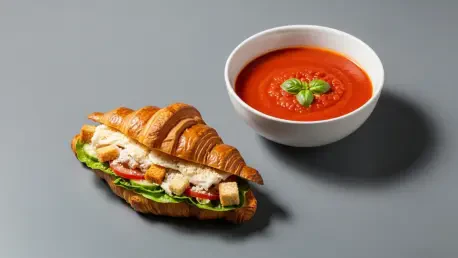
This limited-time offering serves as a strategic synthesis of two fan-favorite menu staples: the signature flaky butter croissant and the classic Chicken Caesar Salade. The sandwich was built with precision, featuring crisp romaine lettuce, house-made croutons, succulent chicken, and shaved parmesan cheese. All these components were bound by the brand’s original Caesar dressing, creating a textured and savory profile that contrasted perfectly with the delicate layers of the pastry.
To further lean into social media “dipping” trends, the brand promoted pairing this buttery creation with their iconic Tomato Basil Soupe. Crafted from vine-ripened tomatoes and fresh cream, the soupe added a multi-sensory dimension to the dining experience. This combination allowed guests to participate in a tactile eating ritual that translated well to video formats, reinforcing the item’s status as a must-try digital trend.
The Strategy of Active Listening in Modern Hospitality
The decision to formalize this item came directly from observations made by leadership, including CEO and President John Dillon. The team noticed that guests were already manually combining these specific ingredients in-café, suggesting a pre-existing demand that had yet to be officially met. This philosophy of “active listening” allowed the brand to capitalize on existing consumer behaviors rather than attempting to force entirely new ones onto the market.
By pivoting quickly to adopt “internet-famous” hacks, la Madeleine reinforced its identity as a provider of approachable French comfort. The brand leveraged the global expertise of its parent company, Groupe Le Duff, to ensure that quality remained consistent across nearly 90 U.S. locations. This infrastructure supported the rapid rollout of the item, proving that a large-scale operation could still behave with the speed and flexibility of a smaller, trend-focused boutique.
How Legacy Brands Can Successfully Adopt Viral Trends
To replicate the success of this launch, restaurant operators had to implement a framework that balanced heritage with modern adaptability. This process involved monitoring social media for organic hacks involving existing menu items and streamlining the supply chain to support limited-time offers without compromising on the quality of raw ingredients. By making these trend-driven items accessible through multiple channels—including dine-in, to-go, and third-party delivery—the brand created a unified narrative.
Effective execution required a deep understanding of the brand’s core strengths and an ability to translate those strengths into a format that resonated with new, trend-seeking customers. The company utilized its established reputation for French baking to ground the viral trend in authenticity. This strategic move ensured that the new menu item felt like a natural extension of the brand’s history rather than a desperate attempt at relevance, ultimately strengthening the relationship with both long-time loyalists and a new generation of diners.