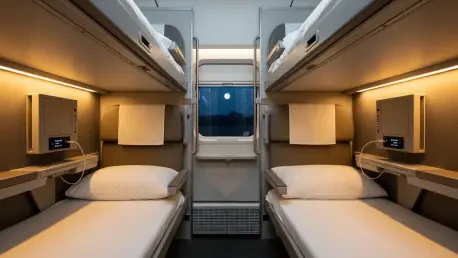

The hum of the platform at KSR Bengaluru is shifting from the heavy rattle of iron to the sleek, silent promise of a technological revolution that aims to fundamentally alter how India’s brightest minds traverse the Deccan Plateau. While travelers have long resigned themselves to the grueling eighteen-hour crawl toward the “Oxford of the East,” a new chapter in rail history is unfolding with the debut of the Vande Bharat Sleeper. This is not merely a faster train; it is a calculated response to a modern crisis of time, promising to bridge the thousand-kilometer gap between the nation’s tech titans in a single, seamless overnight run.
Can a Five-Hour Time Saving Redefine the Journey Between India’s Tech Titans?
The launch of the Vande Bharat Sleeper on the Bengaluru-Pune corridor marks a departure from the traditional rail experience that has defined Indian travel for decades. By shifting toward a semi-high-speed overnight model, the service addresses the specific needs of a workforce that values productivity as much as rest. The ambition here is clear: to link the “Silicon Valley of India” with Pune’s academic and industrial prowess more efficiently than ever before, ensuring that the transition between these two powerhouses is as frictionless as a domestic flight but with the added luxury of a full night’s sleep.
Moving beyond the constraints of older rolling stock, this service represents the next evolution of the Vande Bharat brand, which has already proven its mettle in daytime seating configurations. The transition to a sleeper format acknowledges that for long-distance business corridors, speed alone is not enough; the quality of the journey determines the readiness of the traveler upon arrival. Consequently, this corridor is being repositioned as a mobile hotel that moves at 130 km/h, effectively reclaiming five hours of life for every passenger on board.
Bridging the Connectivity Gap Between Major Industrial Hubs
For years, the limitations of current rail options have served as a bottleneck for the growing demographic of tech workers and corporate executives who frequently move between these cities. The Udyan Express, while a nostalgic staple of the Indian Railways, often demands eighteen hours of a traveler’s schedule—a duration that many modern commuters simply cannot afford in a fast-paced economy. As road congestion increases and airport wait times swell, the demand for a premium, time-sensitive alternative has reached a critical mass, making the introduction of this high-speed sleeper a strategic necessity.
This service is a vital piece of the broader national strategy to modernize an aging infrastructure that has struggled to keep pace with India’s urban expansion. By focusing on the Bengaluru-Pune link, the railway is targeting one of the most lucrative and high-demand segments in the country. The integration of this service into the national grid signifies a shift toward a “hub-and-spoke” model where major industrial centers are connected by rapid, reliable transit, reducing the heavy reliance on carbon-intensive regional flights and over-burdened highway networks.
Engineering a Faster and Safer Transit Experience
Achieving a streamlined thirteen-hour overnight run requires more than just a new coat of paint; it necessitates a complete overhaul of the track infrastructure. Extensive corridor enhancements are currently being finalized, with specific focus on upgrading the Daund-Wadi and Wadi-Guntakal lines to support sustained speeds of 130 km/h. These technical improvements are the backbone of the roadmap to slashing travel times, ensuring that the 9:00 PM departure from Bengaluru translates into a morning arrival in Pune that leaves the passenger refreshed and ready for the workday.
Safety remains the paramount priority in this high-speed endeavor, evidenced by the implementation of the “Kavach” Anti-Collision System across the route. This indigenous technology, coupled with 24/7 CCTV surveillance and advanced fire detection systems, brings the corridor up to global safety standards. Furthermore, the operational logistics have been meticulously planned to maximize passenger productivity; by utilizing the “dead time” of the night, the train provides a stable, vibration-dampened environment that allows for deep sleep, a feat rarely achieved on older, more turbulent locomotives.
Redefining Onboard Comfort and Ergonomic Design
Inside the sixteen-coach configuration, the traditional claustrophobia of rail travel has been replaced by a design philosophy centered on ergonomic well-being. The layout caters to a diverse range of budgets, offering eleven AC 3-tier coaches for affordability, alongside four AC 2-tier coaches and a specialized First AC coach for those seeking peak luxury. The aesthetic shift is palpable, with modern interiors featuring muted tones and high-quality materials that position this service as a direct and formidable competitor to the premium cabins of domestic airlines.
The focus on rest is supported by the introduction of orthopedic berths, which provide significantly better spinal support than standard cushions. Passengers in First AC will benefit from the unprecedented addition of onboard showers and dedicated baby care areas, addressing the needs of both business travelers and young families. With integrated charging ports at every berth and ambient night lighting designed to regulate the internal body clock, the train functions as a sophisticated living space that honors the physical needs of the long-distance commuter.
Navigating the Logistics of Your Future Trip
Financial transparency is a key component of this new offering, with a fare structure designed to be predictable and inclusive. Estimated costs for the AC 3-tier class sit around Rs 2,500, while the First AC experience ranges up to Rs 3,900. In a significant move to prioritize passenger convenience, the railway has moved away from dynamic pricing for this service, ensuring that tickets remain at a fixed rate regardless of seasonal demand. This predictability allows corporate travel desks and individual families to budget their trips with total certainty months in advance.
The booking experience is further simplified by an all-inclusive travel model where gourmet meal services are integrated into the ticket price. Travelers no longer need to worry about external catering or irregular pantry services; instead, they can expect high-quality, standardized meals served at their berths. To ensure accessibility for the high-demand route, the 120-day advance booking window remains in place, allowing users to secure their spots on what is expected to be the most sought-after rail journey in South India.
The launch of the Bengaluru-Pune Vande Bharat Sleeper served as a definitive turning point for the nation’s transit landscape. By successfully merging high-speed engineering with the domestic comforts of a sleeper cabin, the project demonstrated that rail travel could match the efficiency of aviation while offering superior physical rest. The implementation of fixed pricing and advanced safety protocols provided a blueprint for future corridors, encouraging planners to look toward even more ambitious connections across the subcontinent. As passengers began to favor these “hotels on wheels,” the focus shifted toward expanding the Kavach network to every major line, ensuring that the innovations witnessed on this route became the standard for all future Indian rail travel.