
Katarina Railko is a distinguished expert in the hospitality sector, having spent years refining her craft within the travel, tourism, and event planning industries. With a keen eye for the intersection of luxury and operational efficiency, she has become a leading voice for large-scale expos and corporate conferences. Today, we delve into the monumental transformation of the Hyatt Regency Chicago, a project that redefined the standards for urban hospitality through a multi-phase, decade-long renovation. Katarina shares her insights on how these architectural and technological shifts impact the guest experience and the broader competitive landscape of major meeting destinations, summarizing how modern digital integration and streamlined design are essential for maintaining a competitive edge in the high-stakes world of corporate events.
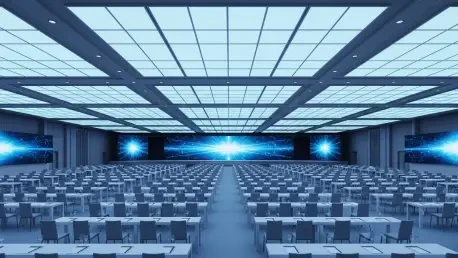
With the addition of LED ceiling panels and a digital feature wall in a 24,000-square-foot ballroom, how do these technological upgrades specifically change the event planning process?
The introduction of high-tech visuals allows planners to move away from bulky, temporary projection rigs and instead use the architecture of the room to tell a story. In a massive 24,000-square-foot space, the light from integrated LED panels can instantly shift the mood from a bright, professional morning seminar to a warm, intimate evening gala with just a few keystrokes. Logistically, this means coordinators spend less time on the labor-intensive load-in for external tech vendors and more time on high-level content curation and branding. The digital feature wall acts as a sensory anchor, ensuring that even in a room of this scale, the message remains front and center for every single attendee in the crowd.
Transitioning over 2,000 guest rooms to multifunctional, streamlined layouts requires significant strategic planning. What specific design choices were prioritized to modernize these spaces, and how do these updates directly impact guest satisfaction?
When you are managing a total of 2,032 rooms across two massive towers, the priority is always the balance between aesthetics and utility. By moving toward multifunctional layouts in the West and East Towers, the design team eliminated the cluttered feel of traditional furniture in favor of sleek, contemporary work-and-rest zones. Guests today crave a sense of space and light, and these streamlined layouts make the rooms feel significantly larger and more intuitive for the modern traveler who mixes business with leisure. From an operational standpoint, these updates often lead to higher satisfaction scores because the rooms are easier to navigate and feel more aligned with the high-tech expectations of a 21st-century visitor.
Managing a $368 million investment over a decade involves balancing long-term vision with immediate guest needs. How did the property manage the workflow across distinct phases without disrupting operations?
Executing a $368 million transformation since 2013 requires a masterclass in phased logistics to ensure that the guest experience is not marred by the sounds of construction. By breaking the work into strategic milestones—starting with the $168 million lobby and meeting space project and ending with the signature ballroom—the property could keep revenue flowing while specific sections were taken offline. The team had to be incredibly disciplined about scheduling, often working on one tower or specific ballroom clusters while the rest of the hotel functioned at full capacity. Success in these stages is measured not just by meeting a budget, but by maintaining occupancy rates and positive reviews even as the very floorboards are being replaced beneath the guests’ feet.
The nearly 7,000-square-foot foyer now features built-in registration desks and digital screens for customized branding. In terms of foot traffic and event flow, how do these permanent fixtures improve the attendee experience?
The 7,000-square-foot foyer serves as the nervous system of any large event, and by installing built-in registration desks, the hotel has removed the friction of temporary, wobbly table setups. Attendees are greeted by a sense of permanence and order the moment they step into the space, which significantly reduces the chaotic bottlenecking often seen at major conventions. The digital screens allow for real-time branding changes, meaning a morning medical conference can seamlessly transition into an evening corporate awards ceremony without a single physical sign being moved. This anchored approach makes navigation feel much more natural, allowing attendees to focus on networking rather than searching for where they need to go.
Major renovations are currently sweeping through properties in cities like Denver and Washington D.C. How does the Chicago market’s demand for large-scale meeting spaces influence these specific architectural choices?
Chicago is a unique player in the hospitality world because it is competing with heavyweights like Denver, which recently saw a $70 million refresh, and D.C., but it has the added challenge of its historic riverfront location. The demand for massive, high-impact meeting spaces in the Midwest means that hotels must go big or go home, hence the focus on a 24,000-square-foot ballroom that can rival any convention center. The architectural choices reflect a need to maximize the lakeside destination appeal while dealing with the logistical task of renovating a massive landmark along a busy waterway. It is a delicate dance of preserving the upper upscale brand identity that the brand is known for in 30 countries while ensuring the building can handle the intense foot traffic of Illinois’ largest hotel.
What is your forecast for the future of large-scale urban hotel renovations?
I expect we will see a continued shift toward smart infrastructure where the building itself becomes a digital canvas, much like what we see with the new feature walls and LED ceilings in Chicago. As more properties across the globe, from Lake Tahoe to the $100 million Hill Country Resort in Texas, complete their multi-million dollar makeovers, the bar for standard amenities will only continue to rise. We are moving away from the era of static rooms and toward highly adaptable, tech-heavy environments that can pivot between different types of clientele in a matter of hours. Urban hotels that fail to invest in these deep, structural modernizations will likely find themselves struggling to compete as guests increasingly prioritize seamless technology and multifunctional design over traditional luxury.