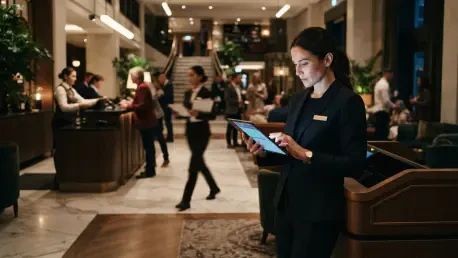

The success of modern hotel operations depends on using technology to enhance the human element that remains the heart of the guest experience. This core philosophy defines the current landscape of the hospitality industry in 2026, where the American Hotel & Lodging Association and Actabl have analyzed how artificial intelligence serves as a workforce multiplier. As global travel demand fluctuates, the burden of administrative tasks has historically pulled staff away from high-value guest interactions. However, the latest findings suggest a fundamental transition: technology is now managing the complexities of backend logistics so that people can focus on the nuance of hospitality. This shift does not aim to replace the warmth of a human welcome but rather to ensure that employees have the mental bandwidth and physical presence required to deliver it. By viewing AI as a strategic enabler rather than a substitute, hotel brands are successfully reframing the relationship between human labor and digital innovation to maintain a competitive edge.
Strategic Integration: Automation as an Operational Catalyst
Driving Speed and Precision: The Shift Toward Administrative Automation
Recent data highlights an overwhelming consensus among hotel professionals regarding the immediate impact of AI on daily workflows. Approximately 90% of industry respondents indicated that artificial intelligence has become instrumental in completing routine, time-consuming tasks with unprecedented speed. While revenue growth was previously the primary focus of technological investments, 38% of operators now identify operational efficiency as the most significant benefit of these tools. This evolution reflects a broader industry trend where streamlining internal processes takes precedence over short-term financial gains. By automating “invisible” backend responsibilities, such as data entry or report generation, hotels are creating a smoother operational flow that benefits the entire organization. The ability to offload repetitive duties allows managers to shift their focus toward quality control and team mentorship, ensuring that the daily experience of the hotel employee is less defined by mundane paperwork and more by meaningful professional contributions.
Maximizing Labor Efficiency: Analyzing Performance Metrics and Output
The measurable success of these automated systems is perhaps most evident in the reduction of labor metrics, such as Hours per Occupied Room. In the first half of 2026, full-service hotels utilizing advanced effectiveness tools saw a 3.1% decrease in this metric, while select-service properties achieved a 3.5% reduction. These improvements occurred simultaneously with rising occupancy rates, suggesting that hotels are achieving higher levels of productivity without increasing the strain on their staff. AI-driven forecasting tools have fundamentally changed how managers approach the delicate balance of staffing and demand. Instead of relying on historical guesswork, leadership now uses real-time data to align labor hours with actual guest arrivals and service needs. This precision minimizes the occurrence of “dead time” during slow shifts and prevents the chaotic understaffing that often leads to burnout during peak periods. Consequently, the workforce is deployed more effectively, ensuring that every hour worked translates directly into enhanced guest satisfaction.
Sustainable Growth: Empowering the Modern Hospitality Professional
Narrowing the Adoption Gap: Bringing Technology to Frontline Teams
Despite the clear advancements in management and administrative efficiency, a significant opportunity remains to extend these benefits to the frontline workforce. While 84% of surveyed professionals felt that AI had improved their overall work experience, only 15% believed that these technological gains had meaningfully reached housekeepers, maintenance crews, and front-desk agents. This disparity highlights the next essential frontier for hospitality technology: the democratization of AI tools for the “boots on the ground” staff. Modern platforms like Alice and ProfitSword are beginning to bridge this gap by providing frontline workers with real-time information that simplifies their daily responsibilities. For instance, housekeepers can now receive instant updates on room availability and guest preferences via mobile devices, reducing unnecessary movement and communication delays. Closing this adoption gap is vital for ensuring that the entire hotel ecosystem functions cohesively, as the efficiency of the frontline staff is what ultimately dictates the speed and quality of the guest experience on a day-to-day basis.
Fostering Long-Term Retention: The Impact of Predictive Scheduling
Labor sustainability has become a critical focal point for the industry, and AI is playing a decisive role in stabilizing the workforce. Turnover rates have demonstrated a steady decline, falling to 5.35% in mid-2026, a notable improvement from the higher levels observed in previous years. This trend is largely attributed to the predictability and stability that AI-enhanced scheduling provides to hotel employees. When managers utilize intelligent demand forecasting, they can create schedules that are far more reliable, allowing staff members to better manage their personal lives, childcare, and educational pursuits. The reduction in unpredictable “on-call” shifts and last-minute changes fosters a sense of loyalty and professionalism that was often missing in traditional hospitality environments. By prioritizing the work-life balance of their employees through smart technology, hotels are successfully positioning themselves as attractive long-term employers. This shift not only preserves institutional knowledge but also builds a more experienced workforce that is better equipped to handle guest needs.
Cultivating a Human-Centric Service Environment: Lessons for Implementation
Industry leaders recognized that the initial wave of AI integration served as a powerful foundation for a more resilient and human-centric service model. They found that the most successful organizations were those that treated technology as a partner in leadership rather than just a cost-cutting measure. Moving forward, it was determined that hotels must continue to invest in mobile-first AI solutions that empower frontline employees to make data-driven decisions on the fly. Stakeholders suggested that the next strategic step involved deeper integration between guest service platforms and financial management systems to create a unified view of hotel health. By removing the friction from daily operations, the industry effectively reclaimed the time necessary for true hospitality to flourish. The lessons learned in 2026 emphasized that while AI provided the engine for efficiency, the warmth of the human touch remained the defining characteristic of a world-class stay. Hotel operators were encouraged to maintain this balance, ensuring that every technological advancement was measured by its ability to support and uplift the people who bring hotels to life.