
The current regulatory overhaul aims to build a professionalized and resilient infrastructure capable of managing the spiritual and physical needs of millions of pilgrims. This ambitious endeavor represents a cornerstone of the Vision 2030 program, which seeks to diversify the economy and elevate the status of the Kingdom as a global hub for religious tourism. As the 2027 horizon approaches, the focus has shifted from volume to the quality of the individual experience, ensuring that every visitor encounters a seamless blend of tradition and modernity. Authorities have recognized that the sheer density of the crowd requires more than just physical space; it necessitates a sophisticated logistical framework powered by real-time data and predictive analytics. By reevaluating the entire journey from the moment of visa application to the final farewell, the government is setting a new standard for religious hospitality that prioritizes safety and spiritual fulfillment.
Integrating Advanced Technology: The Digital Pilgrimage Experience
Smart Identification Systems: Streamlining Entry and Movement
The implementation of the Nusuk platform has fundamentally changed how international visitors interact with the holy sites, moving away from fragmented service providers toward a unified digital ecosystem. For the upcoming 2027 season, this system has been enhanced to include mandatory smart cards that serve as a pilgrim’s primary identification and access key for various transport links and accommodation blocks. These devices allow for instantaneous verification at checkpoints, significantly reducing the bottlenecking that traditionally occurred during the peak movement periods between Makkah and the ritual sites of Mina and Muzdalifah.
Furthermore, the integration of biometric scanning at airports has truncated processing times by nearly fifty percent compared to previous standards. This digital transformation ensures that logistical hurdles do not overshadow the spiritual significance of the journey, allowing participants to remain focused on their devotions while the underlying technology quietly manages the complex mechanics of their stay. These advancements demonstrate the commitment to creating a frictionless environment where technology acts as a silent facilitator, ensuring that the physical logistics of the pilgrimage are as streamlined as possible for every attendee.
Health and Safety Monitoring: IoT Applications in the Field
Maintaining the well-being of a diverse and aging population remains a primary concern for the Ministry of Health, which has now deployed a vast network of Internet of Things (IoT) sensors across the holy sites. These sensors work in tandem with wearable health trackers issued to higher-risk groups, providing real-time data on heart rate, hydration levels, and physical exertion to centralized medical command centers. In the heat of the summer months, such proactive monitoring allows rapid response teams to intervene before a minor exhaustion issue escalates into a medical emergency.
Additionally, AI-driven crowd management software now predicts density thresholds up to an hour in advance, enabling security forces to redirect traffic flow and prevent dangerous surges in confined spaces like the Jamarat Bridge. This level of oversight provides a safety net that was once impossible to coordinate, fostering an environment where physical safety is guaranteed through a high-tech blanket of protection that operates invisibly in the background. By utilizing predictive analytics, authorities can manage millions of people with a level of precision that ensures the sanctity of the experience is never compromised by safety concerns.
Enhancing Physical Infrastructure: Building a Sustainable Future
Sustainable Urban Development: Eco-Friendly Housing Initiatives
The construction landscape in Makkah is undergoing a radical shift toward sustainability, with new hotel projects and permanent residential structures in Mina emphasizing green building certifications. These initiatives are not merely cosmetic; they involve the installation of state-of-the-art district cooling systems that reduce energy consumption by forty percent while providing consistent comfort in extreme temperatures. Developers are now required to incorporate greywater recycling systems and solar energy panels into their designs, aligning the sacred duty of hospitality with the global imperative of environmental stewardship.
By moving away from temporary tents and toward permanent, fire-resistant structures with modular designs, the Kingdom is creating a more resilient urban fabric that can withstand the demands of millions of residents over a short period. This focus on durability and resource management ensures that the infrastructure remains viable for decades to come, providing a high-quality living environment that respects both the sanctity of the land and the health of the planet. These long-term investments in the built environment signify a shift toward a more permanent and professionalized hospitality model that serves both the pilgrim and the environment.
Logistics and Connectivity: The Evolution of High-Speed Transit
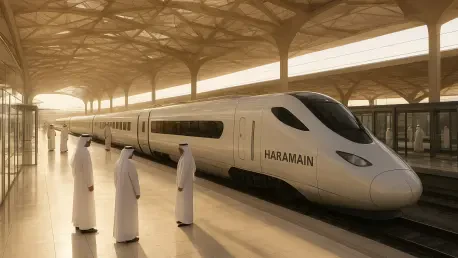
The expansion of the Haramain High-Speed Railway redefined the spatial relationship between the holy cities, turning a multi-hour bus journey into a swift transit experience. Authorities successfully integrated autonomous shuttle fleets to bridge the gap between rail stations and the Grand Mosque, creating a last-mile solution that minimized human error and reduced carbon emissions. These advancements were bolstered by the Makkah Route initiative, which pre-cleared thousands of pilgrims in their home countries, allowing them to bypass immigration queues and proceed directly to their lodgings upon arrival.
By the end of the recent development cycle, this model reached a level of maturity that set a global benchmark for mass transit and international cooperation. Stakeholders observed that these investments not only improved efficiency but also provided a template for future urban planning across the region. The commitment to a seamless, multi-modal transport network demonstrated that complex logistical challenges were resolved through strategic planning and engineering. Moving forward, planners recommended that the next phase focus on integrating renewable energy grids and expanding autonomous links to ensure that growth remained sustainable.