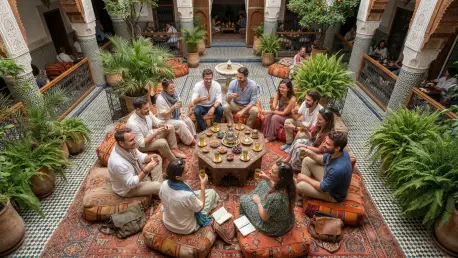

Religious events in the Middle East attract nearly double the interest compared to other global markets, highlighting a unique regional reliance on faith-based tourism. This intense focus on heritage is currently driving a broader transformation in the tourism landscape, where standard leisure models are being replaced by sophisticated cultural narratives. According to recent data from the Arabian Travel Market Travel Trends Report 2026, there is a distinct evolution in how both international visitors and regional residents approach their journeys. This shift is characterized by a desire for travel without boundaries, where the primary objective is to engage with the environment through meaningful and transformative experiences. As the industry prepares for the 34th edition of the Arabian Travel Market in 2027, the focus has pivoted toward authenticity and spontaneous discovery. These elements are no longer peripheral; they have become the central pillars of a tourism strategy that seeks to meet the nuanced demands of a globally connected and highly discerning traveler base.
Regional Tourism: The Fusion of Luxury and Heritage
Inbound tourism to the Middle East is increasingly defined by a sophisticated intersection where high-end luxury meets a profound demand for direct cultural access. While statistics indicate that 77% of travelers visiting the region prioritize premium service and high-quality amenities, they are simultaneously rejecting the concept of isolated opulence. Modern visitors are seeking what experts call hosted experiences, which facilitate genuine interaction with local populations and their daily traditions. This trend suggests that the luxury segment is no longer just about the physical environment of a hotel or resort, but about the quality of the narrative and the depth of the connection provided during the stay. Hospitality providers are responding by integrating local artisans, historians, and storytellers into their core service offerings. This approach ensures that the high-ticket price of travel is justified not only by comfort but by the exclusivity of the cultural insights gained through these curated interactions.
Cultural Drivers: The Role of Heritage Events
Cultural and religious events have emerged as the primary engines for regional travel growth, signaling a significant shift in marketing priorities. Research indicates that 55% of those traveling to the Middle East for specific events are actively seeking cultural immersion, a figure that dramatically exceeds the global average of 42%. This surge in interest has allowed the region to successfully position itself as a global hub for heritage-based tourism that transcends traditional sightseeing. The success of this model lies in the ability to treat heritage as a living asset rather than a static exhibit. By hosting large-scale events that celebrate music, art, and traditional customs, Middle Eastern destinations are attracting a demographic that values intellectual and emotional engagement. This strategy effectively turns regional history into a primary travel product, encouraging visitors to explore deeper into the social fabric of the countries they visit, thereby fostering a more resilient and sustainable tourism economy.
Global Benchmarking: The Rise of the Immersion-Seeker
Current data confirms that cultural immersion has become a dominant force in the global travel market, with the Middle East and North Africa (MENA) region leading this transition. Approximately 42% of travelers within the MENA region are now classified as immersion-seekers, a percentage that outperforms major markets in both North America and Europe. This indicates a universal shift in traveler psychology, where journeys are increasingly viewed as essential opportunities for personal growth and educational enrichment rather than periods of simple relaxation. This demographic is characterized by a desire to step outside the familiar and engage with the complexities of foreign societies. For the Middle Eastern hospitality sector, this means that the traditional focus on sun, sand, and shopping is being supplemented by a more robust offering of cultural education. This trend is particularly strong among younger generations who prioritize social value and environmental sustainability, further pushing the industry toward ethical models.
Outbound Dynamics: Spontaneity and the Hybrid Lodging Model
The outbound travel behavior of residents from the United Arab Emirates and Saudi Arabia reveals a complex and fascinating blend of thorough preparation and a strong appetite for spontaneity. A notable 66% of these travelers make a concerted effort to learn the local language of their destination before departure, which is the highest rate observed across all global markets surveyed in 2026. This proactive engagement reflects a deep level of respect for foreign cultures and a desire to communicate effectively on a personal level. However, this level of preparation does not translate into a rigid adherence to pre-planned schedules once the journey begins. Instead, it serves as a foundation that allows travelers to navigate new environments with greater confidence. This behavior underscores a shift in the Gulf mindset toward a more participatory form of travel, where the goal is to be an active learner rather than a passive observer, preferring organic discovery over fixed tour packages.
Industry Evolution: Actionable Strategies for Future Growth
The tourism sector successfully addressed these evolving demands by bridging the gap between comfort and cultural authenticity through targeted investment. Industry leaders recognized that the future of Middle Eastern tourism relied on creating a nuanced model that integrated hospitality with locally hosted activities. This transition necessitated a focus on making cultural experiences more visible and accessible through strategic partnerships between private developers and local heritage curators. The 34th edition of the Arabian Travel Market served as a catalyst for these changes, prompting agencies to move away from standardized packages toward modular, experience-driven products. Moving forward, the industry should prioritize the development of digital platforms that facilitate spontaneous discovery and offer transparent pricing for multi-generational travel groups. By fostering an environment where luxury serves as a bridge to cultural depth, the region secured its position as a global leader in experiential travel, ensuring long-term resilience.