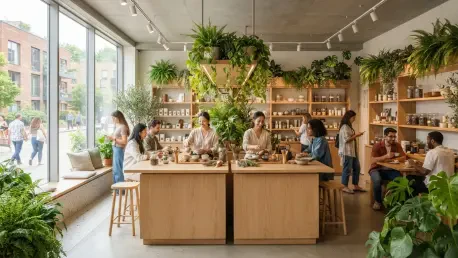

The regional government is offering financial subsidies of up to 35,000 won to travelers who book multi-county tours through designated agencies to encourage actual visits to the southern provinces. This strategic move coincides with the opening of the Jirisan SOOM STATION in the Seongsu-dong district of Seoul, which serves as a high-profile marketing bridge between the bustling capital and the natural serenity of the south. By creating a physical space in one of the most fashionable neighborhoods in the country, the Gyeongsangnam-do Province and the Gyeongnam Tourism Organization are targeting a demographic that is increasingly seeking relief from the pressures of modern life. The pop-up store is not just a promotional booth; it is a meticulously designed gateway that uses multisensory elements to introduce the concept of regional wellness to city residents. This initiative aims to convert the growing interest in mental health and outdoor activities into tangible economic growth for the surrounding counties.
Sensory Immersion: Biometric Stress Tests and Workation Lounges
The journey into the mountain retreat begins with a sophisticated diagnostic process that uses biometric technology to assess the physical and psychological toll of a high-stress lifestyle. Upon entry, participants are equipped with a specialized headband device that measures brainwave activity and physiological stress indicators to provide a quantified look at their current mental state. This data-driven approach allows individuals to recognize the objective need for relaxation before they engage in any restorative activities. Following the assessment, visitors are invited to experience a traditional tea tasting ceremony featuring the renowned green tea from the Hadong region. The ritual of brewing and consuming the tea serves as a forced pause in an otherwise busy day, encouraging guests to focus on sensory details and slow down their pace. By combining modern health diagnostics with ancestral practices, the station effectively validates the benefits of mountain-based wellness through a lens that urban professionals can trust.
Sensory immersion is further deepened through a multimedia zone that recreates the specific environmental conditions found within the Jirisan peaks. Large-scale visual installations display high-definition footage of the changing seasons, while directional speakers broadcast authentic field recordings of local wind patterns and birdsong. This environment is designed to provide an immediate psychological escape from the concrete landscape of Seoul. On the second floor, the facility features a dedicated lounge designed for the modern workation trend, recognizing that many professionals in 2026 prefer to blend their office tasks with natural surroundings. The lounge provides the necessary digital infrastructure for remote work, suggesting that a trip to the southern provinces can be both productive and restorative. This strategy acknowledges the shifting nature of employment and positions the Jirisan region as a premier destination for digital nomads seeking a balance between their careers and well-being.
Regional Connectivity: Strategic Subsidies and Economic Growth
The primary economic objective of the initiative is to revitalize the local communities of six specific counties, including Hadong, Sancheong, Hamyang, Geochang, Hapcheon, and Gurye. Rather than treating these destinations as separate entities, the regional strategy bundles their unique cultural and natural assets into comprehensive, multi-county travel packages. The financial subsidies provided for these tours are specifically designed to reduce the personal costs of dining, experiential activities, and overnight stays in the region. By incentivizing visitors to cross county lines, the program ensures that tourism revenue is distributed more evenly across the southern landscape. This approach helps to overcome the isolation that rural areas often face when competing with major urban centers for domestic travel budgets. The implementation of these subsidies acts as a powerful catalyst, transforming the curiosity generated at the Seoul pop-up into actual travel bookings that support the livelihoods of regional hospitality workers.
Sustainable regional development is further supported by the Gyeongnam Tourism Organization’s commitment to improving local infrastructure and business capabilities. The organization has facilitated significant facility upgrades for 24 distinct local enterprises, ensuring that the accommodations and craft workshops meet the expectations of modern travelers. By working closely with resident cooperatives, the project ensures that the development of tourism content is driven by the people who actually inhabit the region. These local groups create authentic cultural experiences which are then professionally marketed to a wider audience, maintaining a balance between commercial success and cultural integrity. This collaborative model prevents the displacement of local residents and ensures that the economic benefits of increased tourism remain within the community. By empowering these businesses, the province is building a resilient tourism ecosystem that can thrive independently of short-term marketing campaigns, fostering long-term stability.
Strategic Evolution: Actionable Pathways for Regional Tourism
The establishment of the Jirisan SOOM STATION provided a definitive template for how regional governments successfully integrated health tech with traditional tourism in 2026. This project demonstrated that experiential marketing, when supported by biometric data and direct financial incentives, significantly increased the conversion rate from urban interest to rural visitation. The collaborative efforts between the provincial government and local resident cooperatives ensured that the expansion of the tourism sector was both sustainable and culturally respectful. Looking forward, the next phase of this development should focus on the permanent integration of digital health tracking into the travel experience, allowing visitors to monitor their wellness progress throughout their stay. Authorities observed that the most effective way to sustain regional growth was to simplify the logistics of multi-county travel through unified booking platforms. This integrated approach proved that the future of domestic travel lay in creating seamless, wellness-oriented pathways.
To maximize the benefits of this regional model, stakeholders must prioritize the expansion of the digital tourism infrastructure beyond simple apps. In the later months of 2026, it was discovered that travelers responded most favorably to personalized wellness itineraries that adjusted based on biometric feedback. This suggested that future investments should be directed toward wearable technology that synchronized with local providers to offer real-time recommendations. Additionally, the integration of transportation schedules into the subsidy booking platform simplified the transition between counties, reducing the carbon footprint. Policymakers noted that the long-term viability of the southern provinces depended on maintaining high standards of facility maintenance and professional training for local cooperatives. By focusing on these data points, the regional tourism sector successfully transformed a temporary pop-up event into a permanent framework for sustainable and high-value economic development.