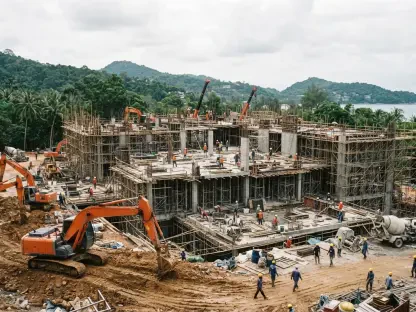

The crisp morning air in Central Oregon often carries the scent of pine and anticipation, but this winter, it also carries the sounds of heavy machinery as Redmond Municipal Airport (RDM) navigates its most challenging holiday season. Balancing the influx of thousands of passengers with a massive terminal expansion requires a level of logistical precision that is currently being tested by the 2026 winter surge. With the project scheduled for completion in late 2027, the facility is currently in a state of high-stakes transformation, operating at maximum capacity while infrastructure is being rebuilt. Management has implemented a series of strategic maneuvers to ensure that the transition from curb to gate remains fluid during the peak travel windows of Thanksgiving and New Year’s. These efforts are not merely reactive; they represent a proactive blueprint designed to handle immediate pressure while laying the groundwork for a more resilient regional hub that will serve the region for many years.
Strategic Logistics and Modernization Initiatives
One of the primary friction points for any regional airport during the holidays is the availability of parking, a challenge that RDM has addressed by expanding its credit card lot capacity. This move comes in response to recent reports of peak-time congestion, providing travelers with more reliable on-site options even as construction equipment occupies various staging areas. Airport Deputy Director Charles Hansen has emphasized that while these physical improvements are vital, passenger behavior remains a critical variable in the efficiency equation. Travelers are being urged to arrive at the terminal at least two hours before their scheduled departure, particularly during the high-traffic window between 5:00 a.m. and 7:00 a.m. when the density of departing flights is at its highest. This buffer time is essential for navigating the revised entry patterns and ensures that the increased volume of checked baggage does not create a backlog at the ticket counters.
To further alleviate the strain on ground infrastructure, the airport administration is encouraging the use of alternative transportation methods such as taxis, local shuttles, and rideshare services. Utilizing these options reduces the total number of vehicles requiring long-term spots, which is particularly helpful during the multi-day stays typical of holiday travelers. For those who are picking up arriving friends or family, a dedicated cell phone waiting area on SE Salmon Drive remains the most effective tool for preventing curbside gridlock. Local regulations regarding the terminal curb are being strictly enforced to permit only active loading and unloading, ensuring that the lane remains clear for emergency vehicles and transit buses. Monitoring real-time parking updates on the official airport website has also become a standard recommendation, allowing travelers to make informed decisions before they even leave their homes, thus preventing unnecessary stress during their commute.
Internal terminal operations have seen significant adjustments to maintain a steady flow of foot traffic while construction barriers line the corridors. A notable change involves the arrival process where all passengers must now utilize a temporary deplaning ramp to enter the main building safely. Clear, high-visibility signage has been installed throughout the tarmac and terminal to guide travelers, minimizing confusion during the transition from the aircraft. The TSA checkpoint continues to open daily at 3:45 a.m., providing an early window for those seeking to beat the mid-morning rush. However, passengers must remain mindful of the 50-minute cut-off rule for checked baggage, as airlines are strictly adhering to these timelines to ensure on-time departures. These operational shifts are part of a broader modernization effort aimed at improving ADA accessibility and increasing the capacity of passenger hold rooms to accommodate the region’s growing population.
The airport authority prioritized clear communication and infrastructure flexibility to mitigate the inevitable friction caused by simultaneous growth and high-volume demand. By expanding the credit card parking facilities and optimizing the use of the cell phone waiting area, the administration addressed the primary bottleneck that often frustrated regional travelers during the holiday rush. The introduction of the temporary deplaning ramp served as a necessary bridge to the future terminal layout, ensuring that safety standards were maintained even as construction progressed. Future considerations for travelers include a greater reliance on digital check-in tools and monitoring real-time flight status updates through carrier-specific applications to bypass potential gate congestion. These steps provided a framework for navigating a period of significant transition, ultimately proving that careful planning can sustain operational efficiency even in the midst of a major physical overhaul.